People today are increasingly seeking places that offer something digital channels cannot replace: connection, atmosphere, a sense of belonging, and the feeling of being part of something. The most valuable currency is no longer just owning a product, but the memories associated with it—moments that are experienced, shared, and emotionally linked to a brand.
The most interesting brands are no longer developing their spaces primarily as points of sale, but as social hubs. These are places where people can linger without the pressure to buy. They are spaces that foster community, convey culture, and bring people together. The traditional store is evolving into a "third place"—a space between home and work where people genuinely enjoy spending their time. This isn't just a romantic notion; it is a strategic necessity.
Younger target groups, in particular, are now very intentional about which brands they give their attention to. It is less about pure visibility or reach and increasingly about cultural relevance. Brands are measured by whether they connect people, take a stand, and create spaces where genuine interaction can take place.
This requires more than just good design or a strong campaign. Brands need cultural intelligence—the ability to not only observe societal shifts but to translate them into relevant experiences and spaces. Physical space plays a unique role here. While digital communication often feels fleeting, curated, and interchangeable, the physical realm remains the only place for immediate, multisensory experience. This is where it is decided whether a brand feels credible, whether an atmosphere is created, and whether people feel welcomed and want to return. The foundation for this is a genuine understanding of people's lives—not just demographically, but culturally. How do people live today? Where do they spend their time? What moves them? Because in the future, brands will no longer just sell products. They will orchestrate experiences and create culture.
We have curated three examples that demonstrate this particularly well:
Nike: When retail becomes part of local culture
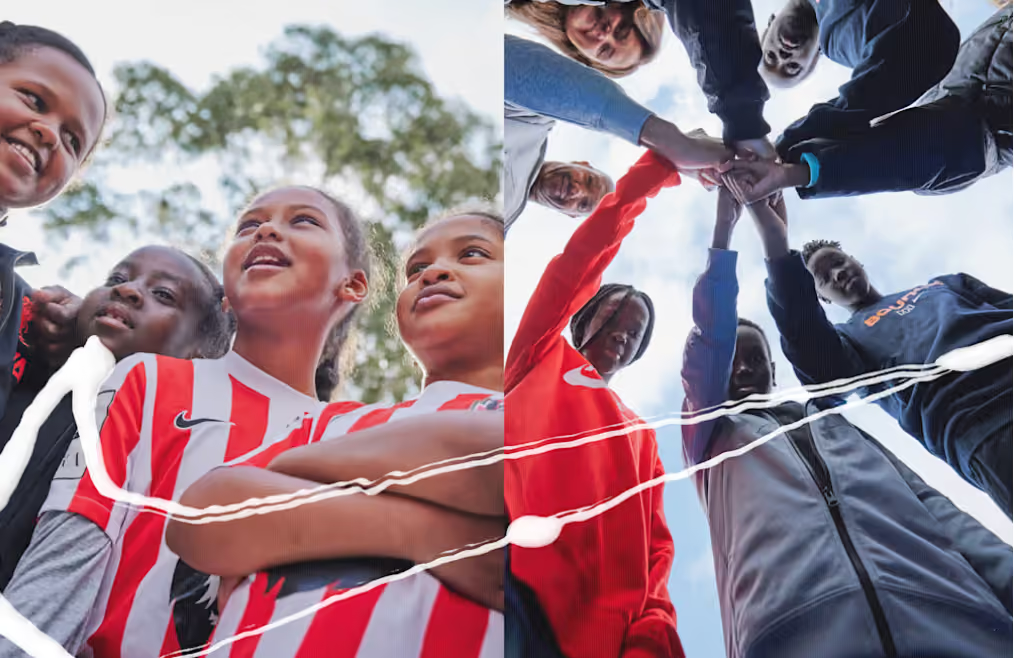
For years, Nike has understood how to design physical spaces as part of a community. In many of their international stores, it has long ceased to be just about products or displays. Run clubs, local sports events, basketball courts, and workshops make the brand an active part of urban life. What is particularly interesting is that this gives the space an entirely different function. The store is not just visited to make a purchase; it becomes a meeting point—a place where relationships are formed. This is exactly what ensures long-term relevance and loyalty.
Arc'teryx Equipment: Community isn't built by events alone
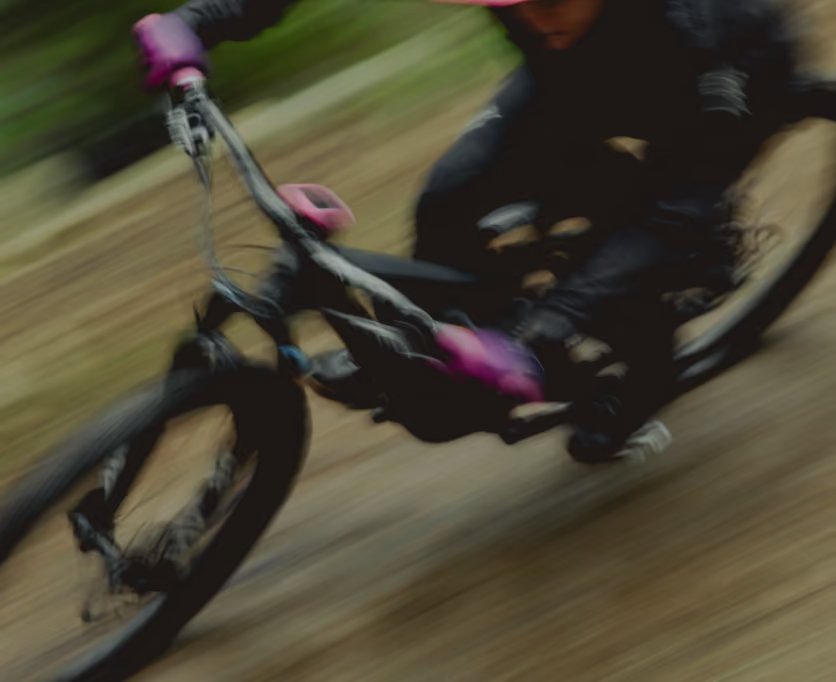
Arc'teryx shows how effectively physical spaces can function through shared experiences. Community hikes, repair sessions, and outdoor workshops might look like standard brand activations at first glance. In reality, there is a much bigger idea behind them. True community is not built through isolated events, but through continuity—through rituals and the desire to keep returning to the same place.
Rapha: Perhaps the most consistent "third place" in retail
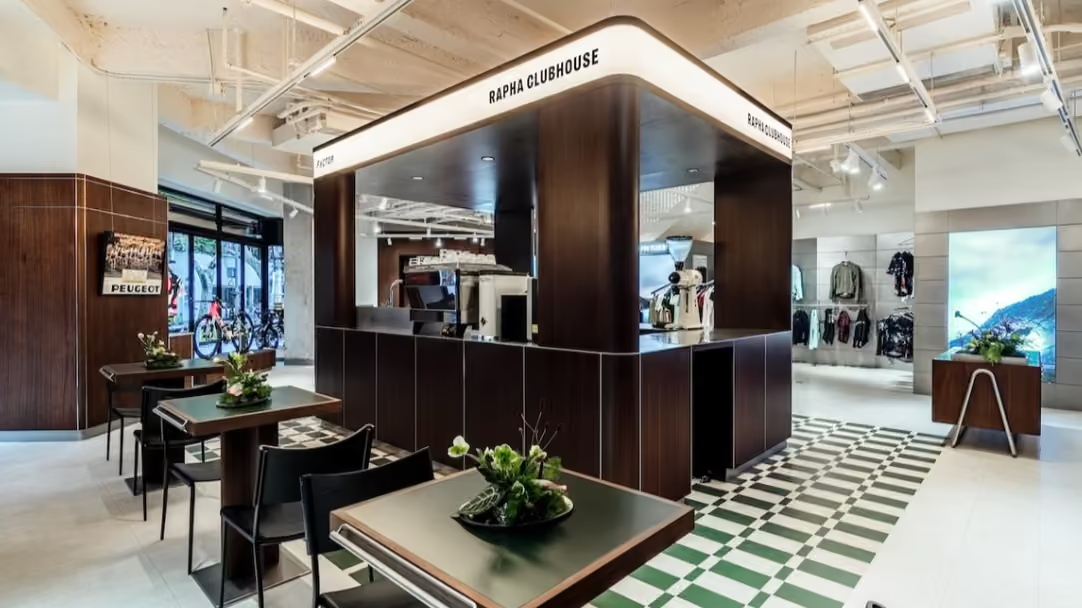
To this day, Rapha remains one of the most compelling examples of community-first retail. Their so-called Clubhouses combine a café, meeting point, workspace, and retail space into an environment that goes far beyond traditional commerce. Many visitors don't come for a specific product; they come for the community and the sense of belonging.
That is precisely the true strength of such spaces: they create identification. People don't feel like customers; they feel like part of a culture.
What brands can learn from this
Many companies are currently investing heavily in new spaces, store concepts, and activations. At the same time, the question arises more and more frequently: why do some spaces remain interchangeable despite high investment, while others develop real magnetism? The answer often lies not in the budget or the architecture alone, but in the mindset behind them.
Retail is thus increasingly becoming a cultural endeavor.
Questions? Let's connect!
Sources:
The Great Good Place, Ray Oldenburg
https://content.rapha.cc/de/en/clubhouses
https://www.vogue.com/article/inside-nike-rise-the-new-london-community-retail-store-concept