Minimalism that makes a statement
How do you design a pop-up shop that leaves a lasting visual impression whilst also demonstrating environmental responsibility?
Idea
Restraint as a design principle
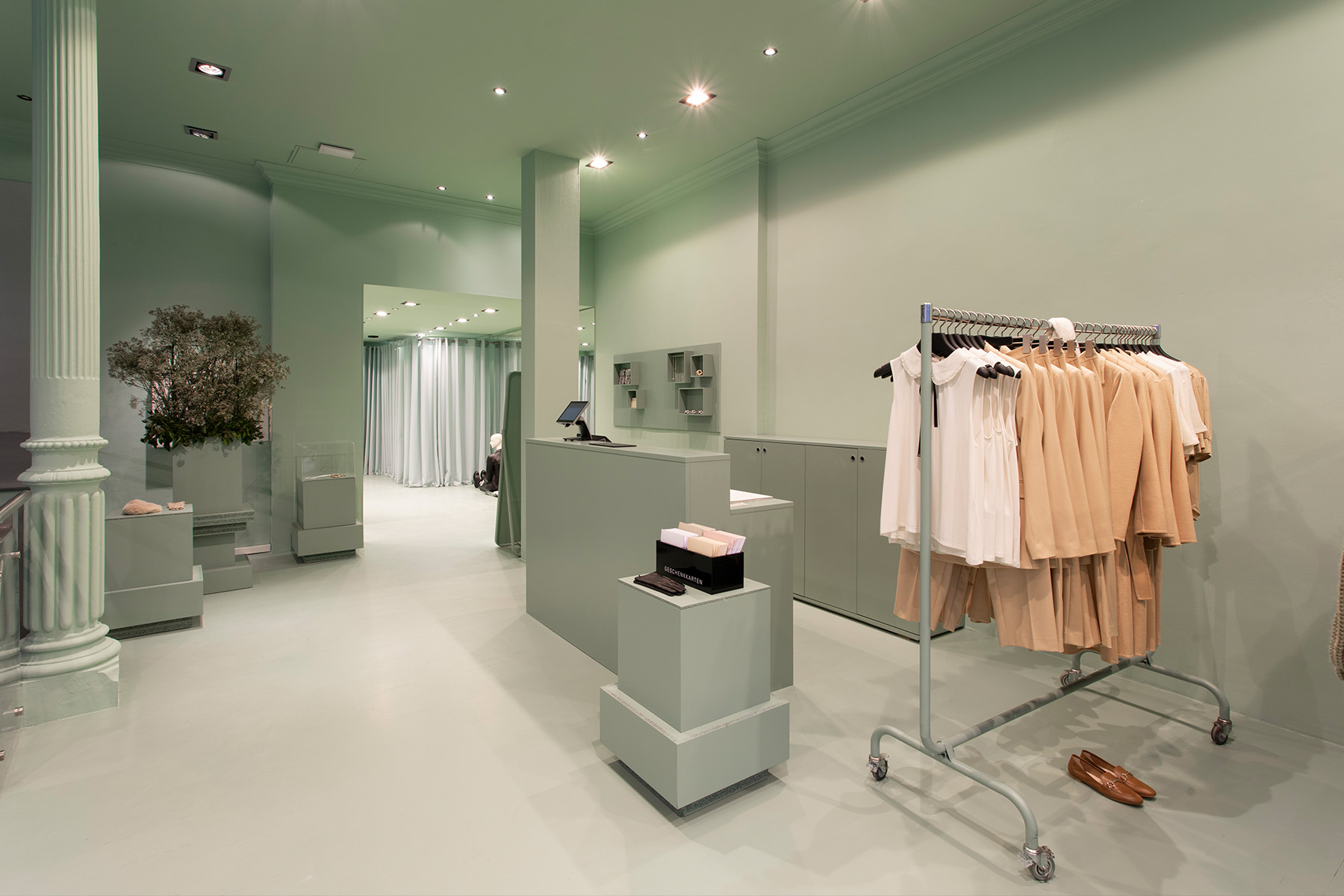
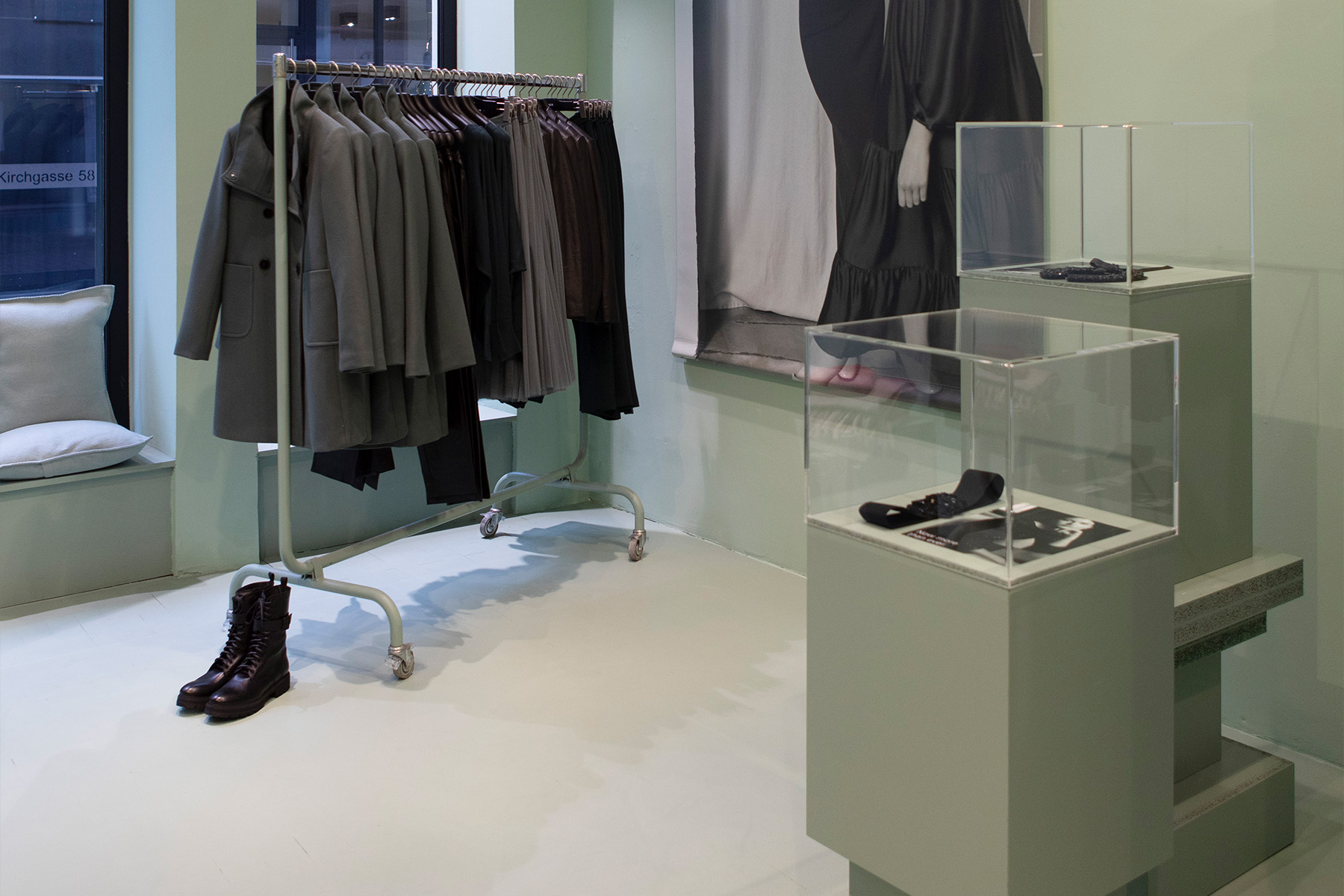
The starting point for the spatial design was a deliberate decision to avoid short-lived elements. The space has been rezoned using a monochrome, lime-green design, which gives the shop the feel of a gallery. As the space takes a back seat in terms of design, it creates a serene setting for the collection – and offers visitors a new perspective on the products.
Concept
From the office to the art plinth
At the heart of the concept lies minimalism, taken to its logical conclusion: the store combines traditional retail with the feel of an exhibition. Clad throughout in a delicate lime green, the spatial concept utilises cubes and plinths created through upcycling from Designplus’s own agency offices. These elements serve as pedestals on which the garments, displayed under protective acrylic covers, take on the appearance of works of art.
Realisation
A material cycle rather than new production
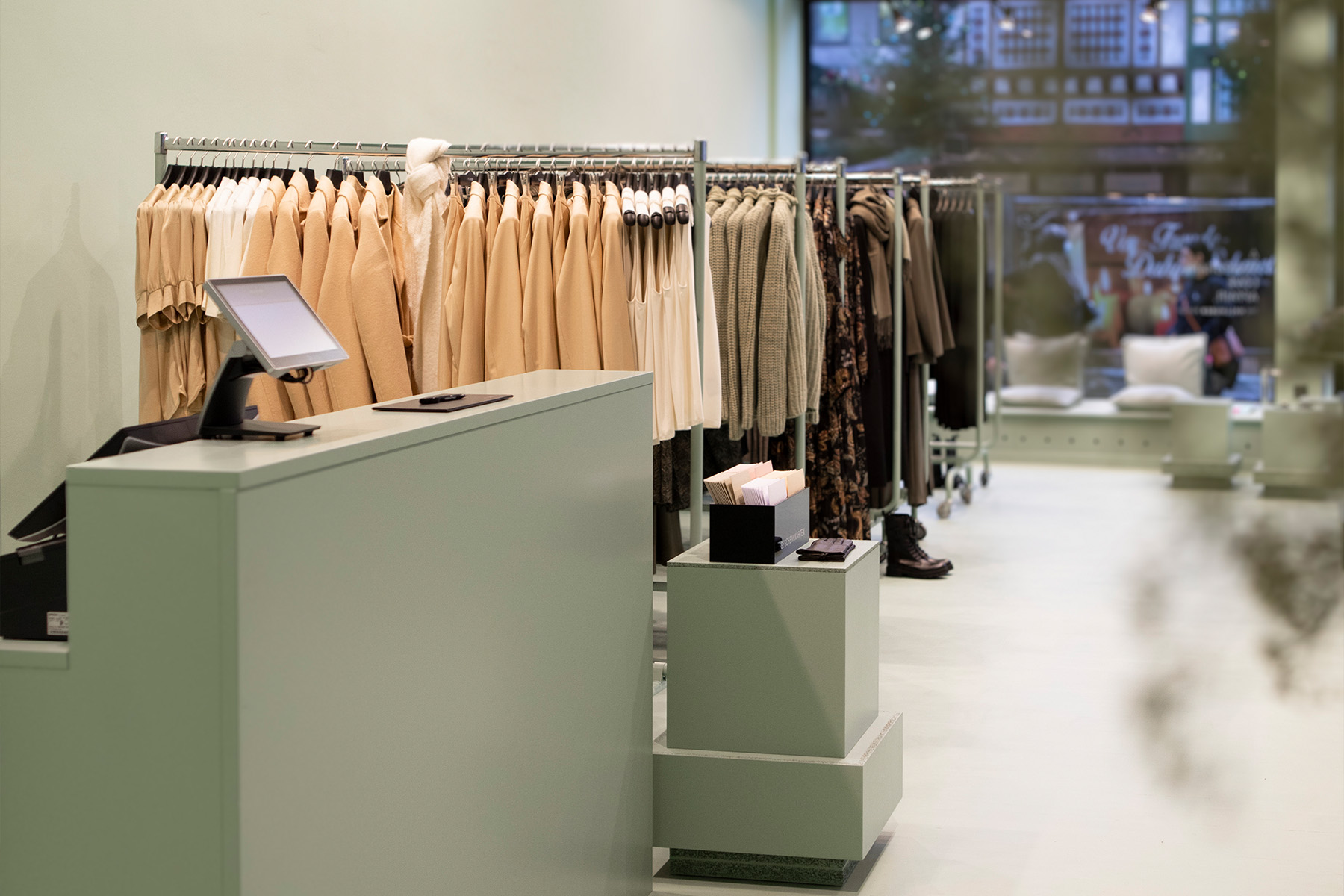
The craftsmanship involved followed a clear principle: do not produce anything new that already exists. All the upcycled elements were carefully refurbished for their new purpose and incorporated into the overall monochrome design. Because existing materials were reused rather than replaced, the project demonstrates to Hallhuber how interior design can work in line with the circular economy without compromising on quality.
One of the best pop-ups of the year, as recognised by Textilwirtschaft.
Impact
The project demonstrates that creativity and the responsible use of resources in retail design are not mutually exclusive. The award from Textilwirtschaft, which ranked it amongst the top three pop-ups of the year, confirms the relevance of this approach for sustainable brand spaces.